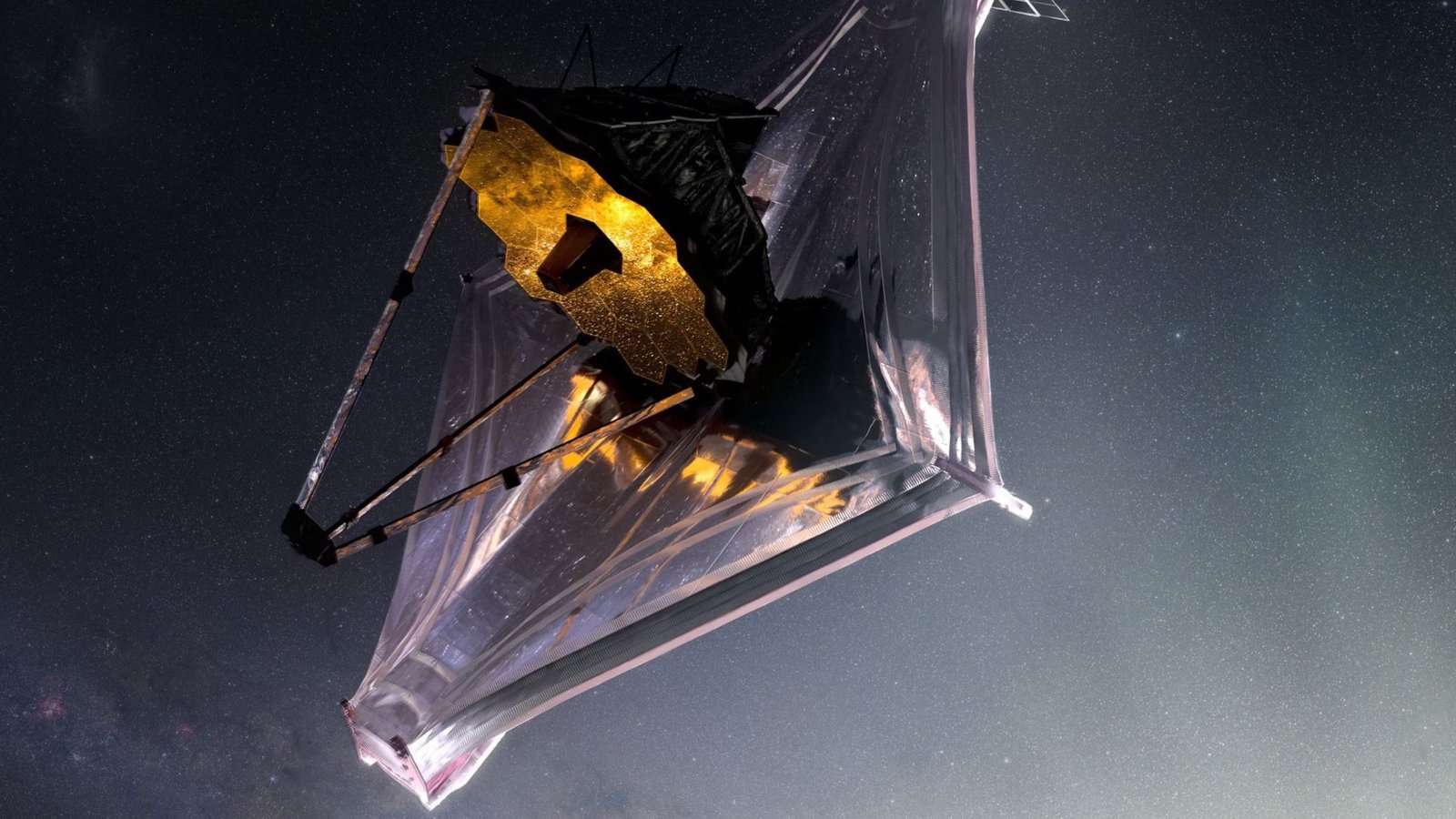
The James Webb Space Telescope (JWST), NASA’s premier space observatory, has captivated the world with its stunning images and groundbreaking discoveries. However, along with the awe and wonder, a number of misconceptions have arisen regarding its capabilities and purpose. WION news has addressed six of the most prevalent misconceptions surrounding the JWST.
Misconception 1: JWST can see through anything.
While the JWST boasts impressive infrared capabilities, it cannot see through everything. It primarily observes infrared light, allowing it to penetrate dust clouds that obscure visible light. However, extremely dense objects or areas with exceptionally high levels of obscuration can still impede its vision.
Misconception 2: JWST is just a replacement for Hubble.
The JWST is not simply a successor to the Hubble Space Telescope; it’s a fundamentally different instrument designed to complement Hubble’s observations. Hubble primarily observes visible and ultraviolet light, while JWST focuses on infrared. This allows JWST to study different aspects of the universe and probe deeper into cosmic history.
Misconception 3: JWST is constantly discovering new life.
While JWST has the potential to detect biosignatures in the atmospheres of exoplanets, it has not yet discovered definitive evidence of extraterrestrial life. Its primary focus is on studying the formation and evolution of galaxies, stars, and planets.
Misconception 4: JWST will solve all of our astronomical questions.
The JWST is a powerful tool, but it cannot answer every astronomical question. It will undoubtedly provide valuable insights and help us understand the universe better, but it will also raise new questions that require further investigation.
Misconception 5: JWST is only useful for astronomers.
The JWST’s discoveries have implications far beyond the field of astronomy. Its observations can shed light on the fundamental laws of physics, the origin of the universe, and the potential for life beyond Earth, captivating scientists, researchers, and the general public alike.
Misconception 6: JWST is invincible.
The JWST is a marvel of engineering, but it is not invulnerable. It is susceptible to damage from micrometeoroids and space debris, which could degrade its performance over time. Engineers have taken precautions to minimize these risks, but they cannot be eliminated entirely. The lifespan of the telescope is also limited by the amount of fuel it has to maintain its orbit and deploy its sunshield.
In conclusion, while the James Webb Space Telescope is an extraordinary instrument with the potential to revolutionize our understanding of the universe, it’s important to approach its discoveries with a healthy dose of skepticism and awareness of its limitations. By debunking these misconceptions, we can appreciate the JWST for what it truly is: a groundbreaking tool for scientific exploration.
Image Source: Google | Image Credit: Respective Owner