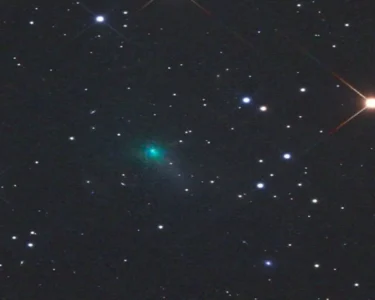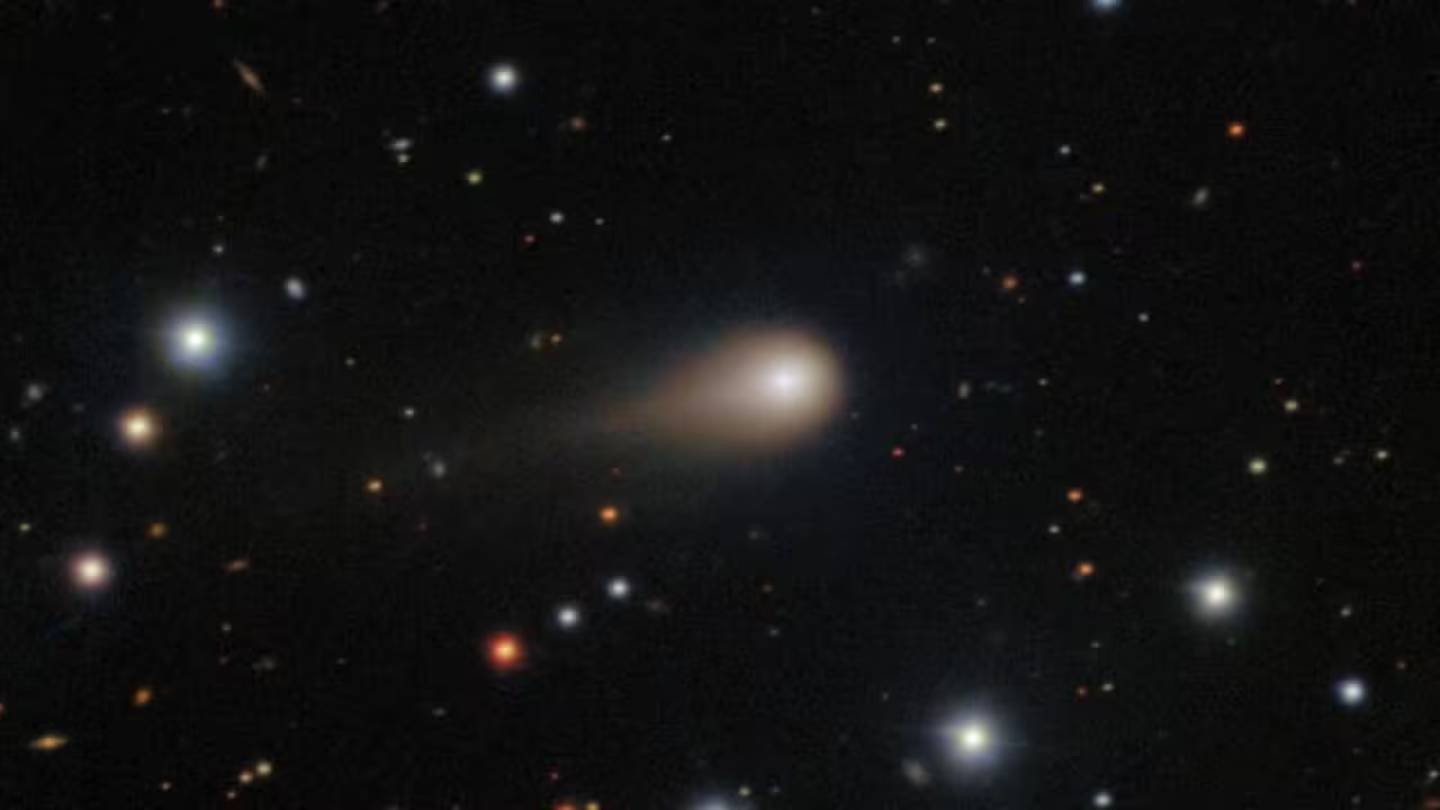
A recent theory proposed by Harvard scientists suggests that the interstellar comet 3I/ATLAS might be significantly larger than initially estimated, potentially even resembling an alien probe. This intriguing hypothesis stems from the comet’s unusual trajectory and brightness, prompting further investigation into its origins and composition. While the claim is speculative, it underscores the ongoing quest to understand interstellar objects and the possibility of extraterrestrial life.
3I/ATLAS, discovered in 2017, is only the second interstellar object ever observed passing through our solar system. Its peculiar behavior has captured the attention of astronomers worldwide. Initial observations estimated the comet to be relatively small, but recent analyses suggest a potentially much larger size, which fuels the speculation.
Unusual Trajectory and Brightness
One of the primary reasons for the alien probe hypothesis is the comet’s unusual trajectory. Its path through the solar system doesn’t perfectly align with what would be expected of a naturally occurring comet. The trajectory has led some scientists to consider that it might be artificially propelled or guided. Additionally, the brightness of 3I/ATLAS is another factor. Its brightness varied significantly as it traveled through our solar system, which contrasts with the behavior of typical comets that exhibit a more consistent level of brightness based on their proximity to the sun.
Another aspect of the study is the mass and density of 3I/ATLAS. If the comet were indeed larger, it would suggest a different mass and density than initially calculated. This factor is critical for determining the object’s composition and structural integrity. Understanding these elements could potentially reveal clues about its origin and possible artificial construction.
While the alien probe theory is controversial, it highlights the importance of further research and observation. The scientific community is eagerly awaiting additional data and analyses that might shed more light on the true nature of 3I/ATLAS. Such investigations could significantly contribute to our understanding of interstellar objects and the universe beyond our solar system. It also serves as a reminder of the inherent mysteries in space exploration and the continuous search for answers about the cosmos. The hypothesis sparks imagination while emphasizing rigorous scientific methodology in evaluating such claims.
Further studies involving advanced telescopes and observational techniques are crucial in determining the true nature of 3I/ATLAS. This could involve analyzing the comet’s spectral properties to identify its chemical composition and searching for any signs of artificial structures or technology. Future missions could potentially be launched to intercept and study the object up close, providing valuable insights into its origins and characteristics. Such endeavors demonstrate humanity’s unending fascination with the universe and commitment to exploration and discovery.
Image Source: Google | Image Credit: Respective Owner