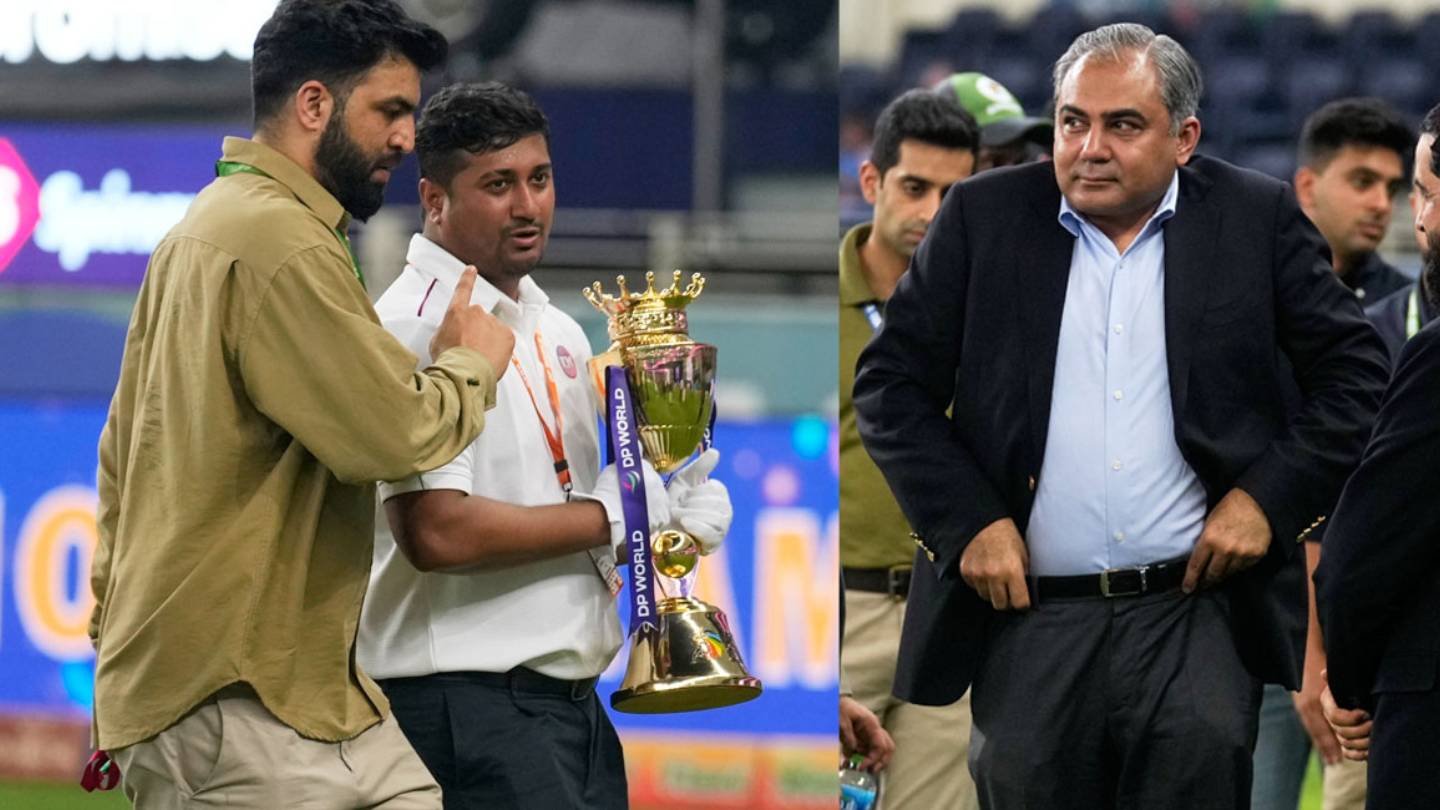
Mohsin Naqvi, Chairman of the Pakistan Cricket Board (PCB), has extended an invitation to the Indian cricket team to collect the Asia Cup trophy from him at the Asian Cricket Council (ACC) office in Dubai. This statement comes amidst ongoing discussions and uncertainties surrounding the hosting of the Asia Cup tournament and the participation of various teams. The offer, while seemingly straightforward, carries significant weight given the complex geopolitical relations between India and Pakistan, and their impact on sporting events.
Background of the Asia Cup Hosting Issues
The Asia Cup has faced numerous logistical and political challenges in recent years. Originally, Pakistan was slated to be the sole host of the tournament. However, the Board of Control for Cricket in India (BCCI) expressed reservations about sending its team to Pakistan due to security concerns and the prevailing political climate. This led to discussions about a hybrid model, where some matches would be held in Pakistan, and the remaining, including India’s matches, would be hosted in a neutral venue.
The ACC eventually approved a hybrid model, with Pakistan hosting a portion of the matches and Sri Lanka hosting the remainder, including the crucial India versus Pakistan encounters and the final. This arrangement was intended to accommodate the BCCI’s concerns while allowing Pakistan to retain its hosting rights in principle. However, even this compromise has faced scrutiny and debate, highlighting the deep-seated issues affecting cricketing relations between the two nations.
Naqvi’s Statement and its Implications
Naqvi’s statement can be interpreted in several ways. On one hand, it could be seen as a gesture of goodwill, emphasizing that despite the off-field tensions, the spirit of sportsmanship should prevail. By offering to personally hand over the trophy, Naqvi might be aiming to project an image of Pakistan as a gracious and accommodating host, ready to welcome their rivals in a neutral setting. On the other hand, the statement could also be viewed as a subtle jab at the BCCI, underscoring Pakistan’s initial claim to hosting rights and highlighting the compromises made to ensure India’s participation.
The political undertones are undeniable. Cricket between India and Pakistan is rarely just a game; it is often laden with national pride and political symbolism. Any interaction, be it a match or an offer to present a trophy, is closely scrutinized by fans and political analysts alike. Naqvi’s invitation adds another layer to this complex dynamic, prompting further speculation about the future of cricketing relations between the two countries.
Ultimately, whether the Indian team accepts Naqvi’s offer remains to be seen. The decision will likely involve careful consideration by the BCCI and relevant government authorities, taking into account the broader political context and security considerations. In the meantime, Naqvi’s statement serves as a reminder of the unique challenges and complexities that define cricket in the subcontinent.
Image Source: Google | Image Credit: Respective Owner