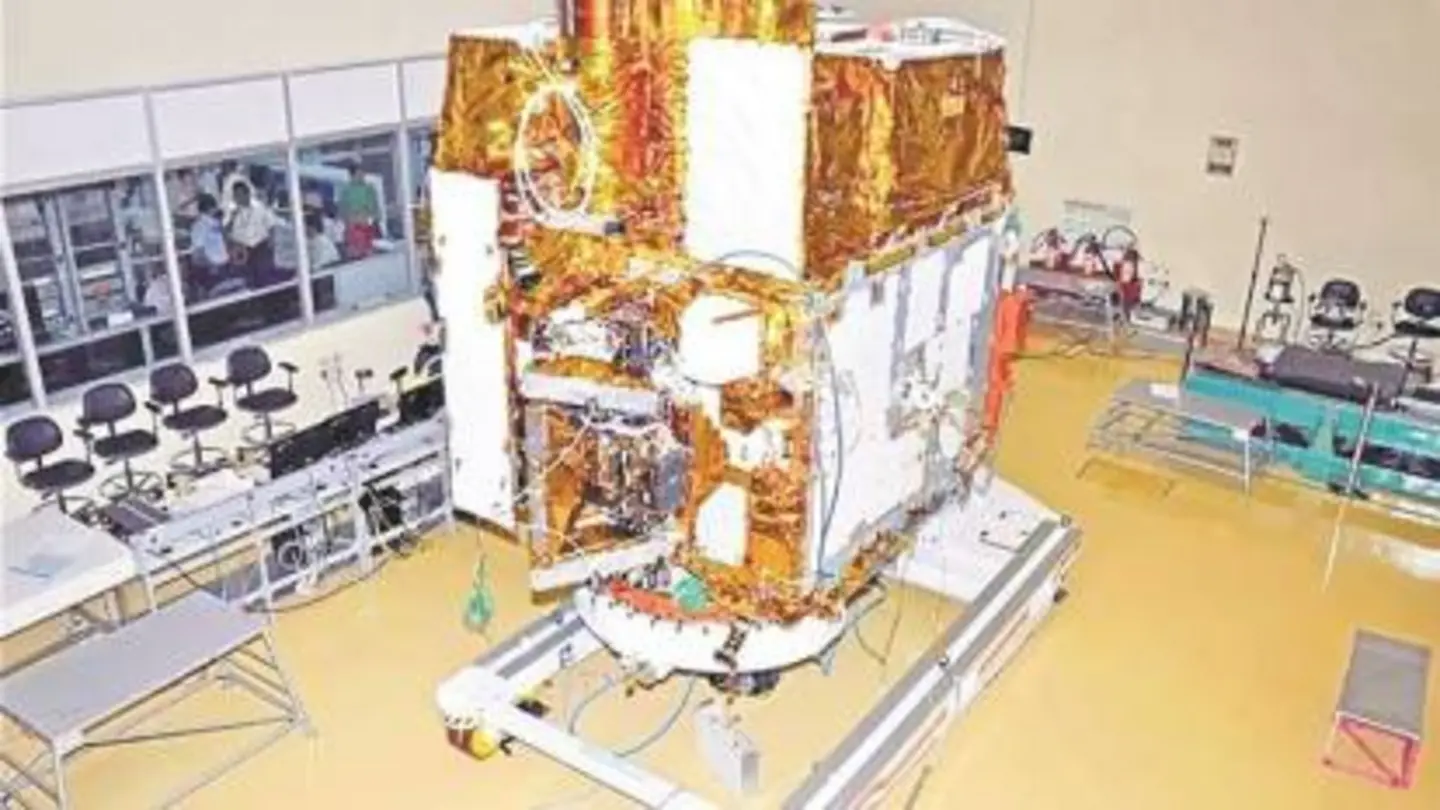
India’s first multi-wavelength astronomy observatory, AstroSat, has successfully completed a decade of operations, marking a significant milestone in the nation’s space science endeavors. Launched on September 28, 2015, by the Indian Space Research Organisation (ISRO), AstroSat has provided invaluable data and insights into a wide range of celestial objects and phenomena, solidifying India’s position as a key player in astronomical research.
AstroSat’s Unique Capabilities
AstroSat is equipped with five distinct payloads that enable it to observe the universe across a broad electromagnetic spectrum, from ultraviolet to hard X-rays. This multi-wavelength capability distinguishes it from many other space-based observatories, which typically focus on a narrower range of wavelengths. The instruments on board AstroSat include the Ultraviolet Imaging Telescope (UVIT), the Large Area X-ray Proportional Counter (LAXPC), the Soft X-ray Telescope (SXT), the Cadmium Zinc Telluride Imager (CZTI), and the Scanning Sky Monitor (SSM). Each of these instruments plays a crucial role in capturing different aspects of cosmic emissions.
Over the past ten years, AstroSat has been utilized by researchers from around the globe, resulting in numerous scientific publications and discoveries. The observatory has been instrumental in studying various astrophysical sources, including black holes, neutron stars, active galactic nuclei, supernova remnants, and star clusters. Its unique capabilities have allowed scientists to probe the properties of these objects in unprecedented detail, shedding light on their formation, evolution, and interactions.
AstroSat’s observations have contributed to a better understanding of the high-energy processes occurring in the vicinity of black holes and neutron stars. The data from LAXPC and SXT have provided valuable insights into the accretion disks and jets associated with these compact objects. Furthermore, the CZTI instrument has been used to study gamma-ray bursts, the most luminous explosions in the universe, offering clues about their origins and mechanisms.
The UVIT instrument has been particularly useful for studying star formation regions and the properties of young, hot stars. Its ability to observe in the ultraviolet range has enabled scientists to identify and characterize these stars, which are often obscured by dust and gas in visible light. UVIT has also been used to study the atmospheres of planets orbiting other stars, providing information about their composition and potential habitability.
Despite its initial design life of five years, AstroSat has continued to operate successfully for a decade, thanks to the dedication and expertise of the ISRO team and the scientific community. The mission has been extended multiple times, and it is expected to continue operating for several more years, providing further opportunities for groundbreaking discoveries. AstroSat’s legacy extends beyond its scientific achievements. It has also played a vital role in inspiring the next generation of scientists and engineers in India and around the world.
The data collected by AstroSat are publicly available, allowing researchers from across the globe to access and analyze the information. This open-data policy has fostered collaboration and accelerated the pace of scientific progress. As AstroSat continues its mission, it is poised to make even more significant contributions to our understanding of the universe. Its success serves as a testament to India’s growing capabilities in space science and technology.
Image Source: Google | Image Credit: Respective Owner