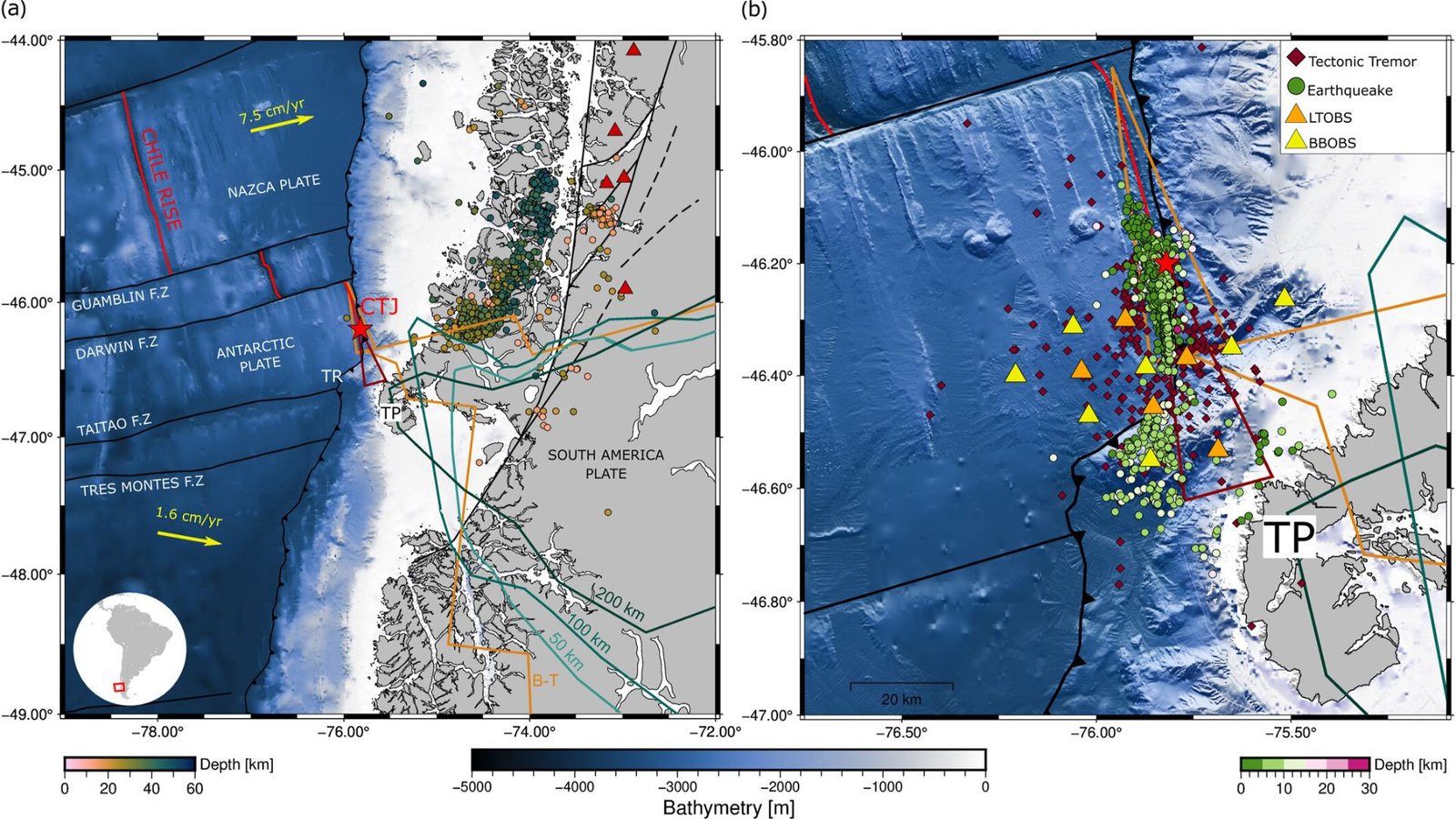
A new study published in ESS Open Archive delves into the characteristics of seismic energy rate functions associated with shallow tremors. The research focuses on understanding the nuances of these tremors, which are subtle ground vibrations often imperceptible to humans but crucial for comprehending larger seismic events. Shallow tremors, occurring close to the Earth’s surface, exhibit unique properties that differentiate them from deeper earthquakes.
The study investigates the energy released during these tremors, analyzing the rate at which this energy is dissipated over time. This analysis is pivotal in identifying patterns and potential precursors that might aid in predicting more significant seismic activity. Researchers utilize advanced seismological techniques and data analysis methods to dissect the complex waveforms generated by these tremors.
Data Acquisition and Analysis
Seismic data from various geographical locations were collected and processed, enabling the researchers to compare tremors across different geological settings. The analysis involved sophisticated signal processing algorithms to isolate the tremor signals from background noise and other seismic events. By examining the frequency content and amplitude variations of the signals, researchers could infer valuable information about the source mechanisms and propagation paths of the tremors. The study particularly emphasizes the importance of high-resolution data to accurately capture the subtle characteristics of shallow tremors.
The findings reveal that the energy release rate functions of shallow tremors display distinct patterns depending on factors such as the local geology, fault structure, and stress conditions. In regions with complex fault systems, the energy release patterns tend to be more irregular and sporadic compared to areas with simpler geological configurations. These variations provide insights into the underlying processes governing tremor generation and their relationship to tectonic forces. The study also explores the potential link between shallow tremors and the initiation of larger earthquakes, suggesting that tremors could serve as indicators of increasing stress accumulation in the Earth’s crust.
Implications for Earthquake Research
Furthermore, the research contributes to a better understanding of the mechanics of fault rupture and the dynamics of earthquake nucleation. By unraveling the complexities of shallow tremors, scientists can refine existing earthquake models and improve hazard assessment techniques. The study highlights the need for continued monitoring of seismic activity and the development of advanced analytical tools to detect and characterize subtle tremor signals. This comprehensive approach is essential for mitigating the risks associated with seismic events and protecting communities living in earthquake-prone regions. The long-term goal is to enhance early warning systems and provide timely alerts to reduce the impact of earthquakes on human lives and infrastructure.
Image Source: Google | Image Credit: Respective Owner