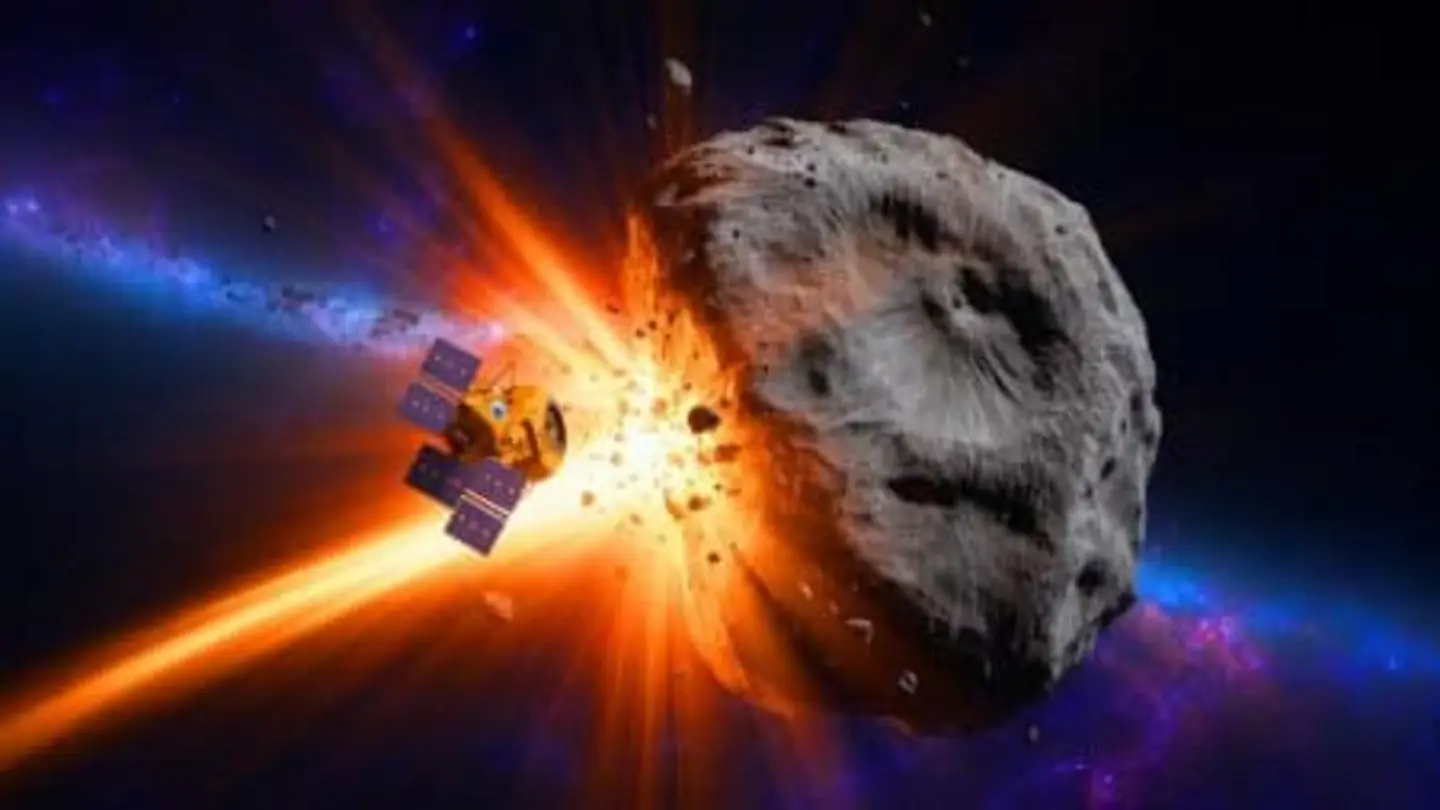
NASA has revealed that an asteroid has broken in half, transforming into a peculiar rugby ball shape. This intriguing discovery sheds light on the dynamic processes occurring within our solar system and offers valuable insights into the composition and structural integrity of these celestial bodies.
The Breakup
The asteroid’s fragmentation is attributed to a combination of factors, including gravitational forces, thermal stress, and internal weaknesses. As the asteroid orbits the sun, it experiences varying degrees of gravitational pull from nearby planets and other celestial objects. These gravitational forces can induce stress within the asteroid’s structure, leading to cracks and fissures. Furthermore, the asteroid’s surface is subjected to intense temperature fluctuations as it rotates, causing thermal stress that can further weaken its integrity.
Scientists believe that the asteroid likely had pre-existing internal flaws or fractures, making it more susceptible to these external forces. Over time, these weaknesses amplified, eventually culminating in the asteroid’s dramatic breakup. The resulting fragments gradually drifted apart, eventually settling into a new, elongated shape reminiscent of a rugby ball.
Implications for Planetary Science
This event provides a unique opportunity for scientists to study the internal structure and composition of asteroids. By analyzing the fragments, researchers can gain a better understanding of the materials that make up these celestial bodies and the processes that govern their evolution. The discovery also has implications for our understanding of the risk posed by near-Earth asteroids. Knowing how asteroids break apart and change shape can help scientists develop more effective strategies for deflecting or mitigating potential impacts.
NASA’s ongoing missions, such as the OSIRIS-REx mission to asteroid Bennu and the Lucy mission to the Trojan asteroids, are providing valuable data that complements these findings. These missions are equipped with sophisticated instruments that can analyze the surface composition, internal structure, and orbital dynamics of asteroids, providing a more complete picture of these fascinating objects.
The transformed asteroid serves as a compelling reminder of the ever-changing nature of our solar system and the constant interplay of forces that shape the cosmos. Further research and observation are crucial to fully understand the long-term implications of this breakup and its potential impact on the surrounding environment.
The findings underscore the importance of continued investment in space exploration and research. By studying asteroids and other celestial bodies, we can gain a deeper understanding of our place in the universe and develop technologies to protect our planet from potential threats. The rugby ball-shaped asteroid is a testament to the dynamic and unpredictable nature of space, urging us to continue exploring and unraveling its mysteries.
Image Source: Google | Image Credit: Respective Owner