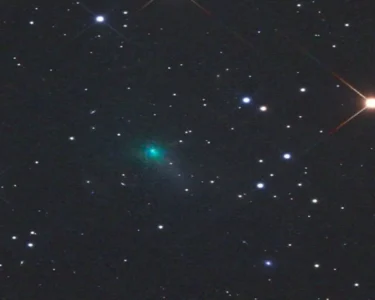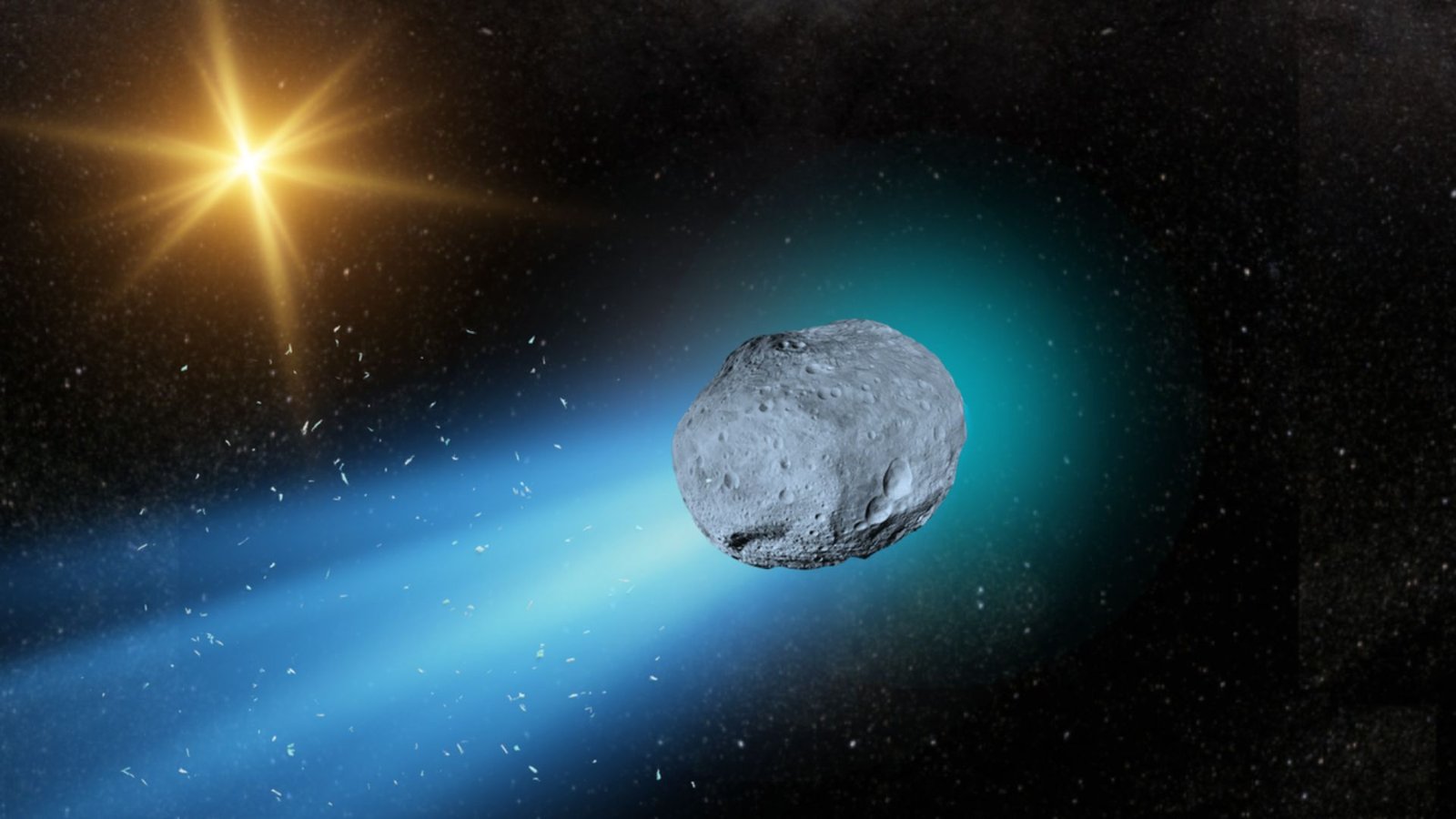
A recent study suggests that interstellar comet 3I/ATLAS may be significantly larger than previously estimated, challenging current models of comet formation and interstellar object composition. This unusual finding stems from observations and analysis of the comet’s behavior as it traversed our solar system. The Debrief reports that the comet’s estimated mass suggests a composition or formation process distinct from comets originating within our solar system. This anomaly has spurred renewed interest in understanding the origins and properties of interstellar objects that occasionally visit our cosmic neighborhood.
Analyzing Comet 3I/ATLAS
Scientists reached this conclusion by meticulously analyzing the comet’s trajectory and its interactions with solar radiation. The comet’s orbit was observed using ground-based telescopes and space-based observatories, allowing researchers to accurately measure its speed and direction. Moreover, scientists also examined the comet’s coma, the nebulous envelope surrounding the nucleus. Changes in the coma’s brightness and size provided clues about the comet’s composition and how it was reacting to the sun’s heat. This analysis pointed towards a larger-than-expected nucleus, implying a higher mass than initially anticipated.
One of the biggest challenges in studying interstellar comets is the limited time available for observation. These objects are only visible for a relatively short period as they pass through our solar system, making it essential to gather as much data as possible during this window. The study of 3I/ATLAS benefited from extensive observations and advanced computational models. This allowed researchers to extrapolate the comet’s properties and reconstruct its likely formation history.
Implications for Interstellar Object Research
The implications of this finding are far-reaching. If 3I/ATLAS is indeed anomalously massive, it suggests that the population of interstellar comets may be more diverse than previously thought. It also raises questions about the conditions in which these comets formed. It challenges the existing models, suggesting that there might be different mechanisms at play in the formation of comets in other star systems. Further study of interstellar objects is critical for understanding the building blocks of planetary systems beyond our own. It provides an opportunity to test our theories of planet formation and potentially learn about the existence of other planetary systems with different characteristics.
Future missions and observations will be crucial for confirming these findings and exploring the characteristics of other interstellar objects. Space telescopes, like the James Webb Space Telescope, hold the potential to provide even more detailed information about their composition and structure, shedding light on their origins and their role in the universe. The discovery of anomalously massive 3I/ATLAS is a call for increased investment and research into interstellar objects, pushing the boundaries of our understanding of the cosmos.
Image Source: Google | Image Credit: Respective Owner