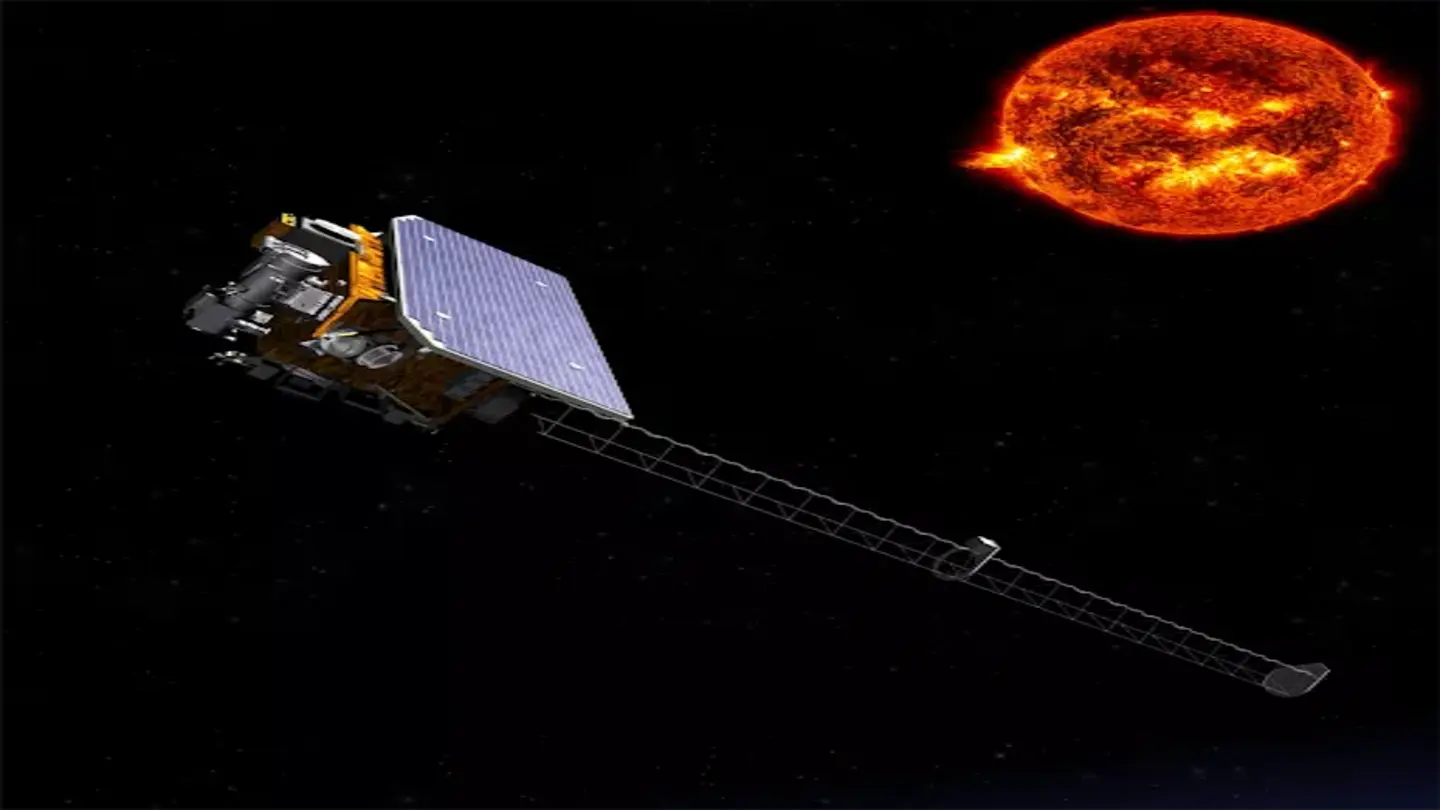
The National Oceanic and Atmospheric Administration (NOAA) has announced the scheduled launch of the Space Weather Follow On-Lagrange 1 (SWFO-L1) spacecraft for Tuesday, September 23rd. This critical mission will enhance space weather forecasting capabilities and provide vital data for protecting infrastructure on Earth.
The SWFO-L1 spacecraft will be positioned at the Lagrange 1 point, approximately one million miles away from Earth towards the sun. This location provides an ideal vantage point for observing solar activity before it impacts our planet. By monitoring solar flares, coronal mass ejections (CMEs), and other phenomena, SWFO-L1 will give forecasters more time to issue warnings and take preventative measures.
Mission Objectives
The primary objective of the SWFO-L1 mission is to ensure the continuity of space weather observations currently provided by the aging Advanced Composition Explorer (ACE) spacecraft. ACE has been instrumental in space weather forecasting for over two decades, but its operational lifespan is nearing its end. SWFO-L1 will carry a suite of instruments designed to measure the solar wind, magnetic fields, and energetic particles. These measurements will be crucial for understanding and predicting space weather events.
The data collected by SWFO-L1 will be used to improve space weather models and forecasting tools. These improvements will allow for more accurate predictions of geomagnetic storms, which can disrupt power grids, communication systems, and satellite operations. Geomagnetic storms can also pose a threat to astronauts in space and impact airline navigation systems.
In addition to its forecasting role, SWFO-L1 will also contribute to our understanding of the fundamental physics of space weather. By studying the interactions between the sun and the Earth’s magnetosphere, scientists hope to gain new insights into the processes that drive space weather events. This knowledge could lead to even better forecasting techniques in the future.
Instrumentation
The SWFO-L1 spacecraft is equipped with several advanced instruments, including the Compact Coronagraph (CCOR) and the Space Weather Instrument Suite (SWIS). CCOR will image the solar corona, allowing scientists to observe CMEs as they propagate through space. SWIS will measure the properties of the solar wind, including its speed, density, temperature, and magnetic field strength. These measurements will provide a comprehensive picture of the space environment near Earth.
The launch of SWFO-L1 marks a significant step forward in our ability to protect against the hazards of space weather. By providing timely and accurate forecasts, this mission will help to minimize the impacts of solar activity on our technological infrastructure and ensure the safety of our critical systems. The data gathered will be invaluable for scientists, forecasters, and policymakers alike.
The mission represents a substantial investment in space weather monitoring and underscores NOAA’s commitment to safeguarding our nation from the effects of solar disturbances. The anticipation is high as the launch date approaches, promising a new era in space weather prediction.
Image Source: Google | Image Credit: Respective Owner