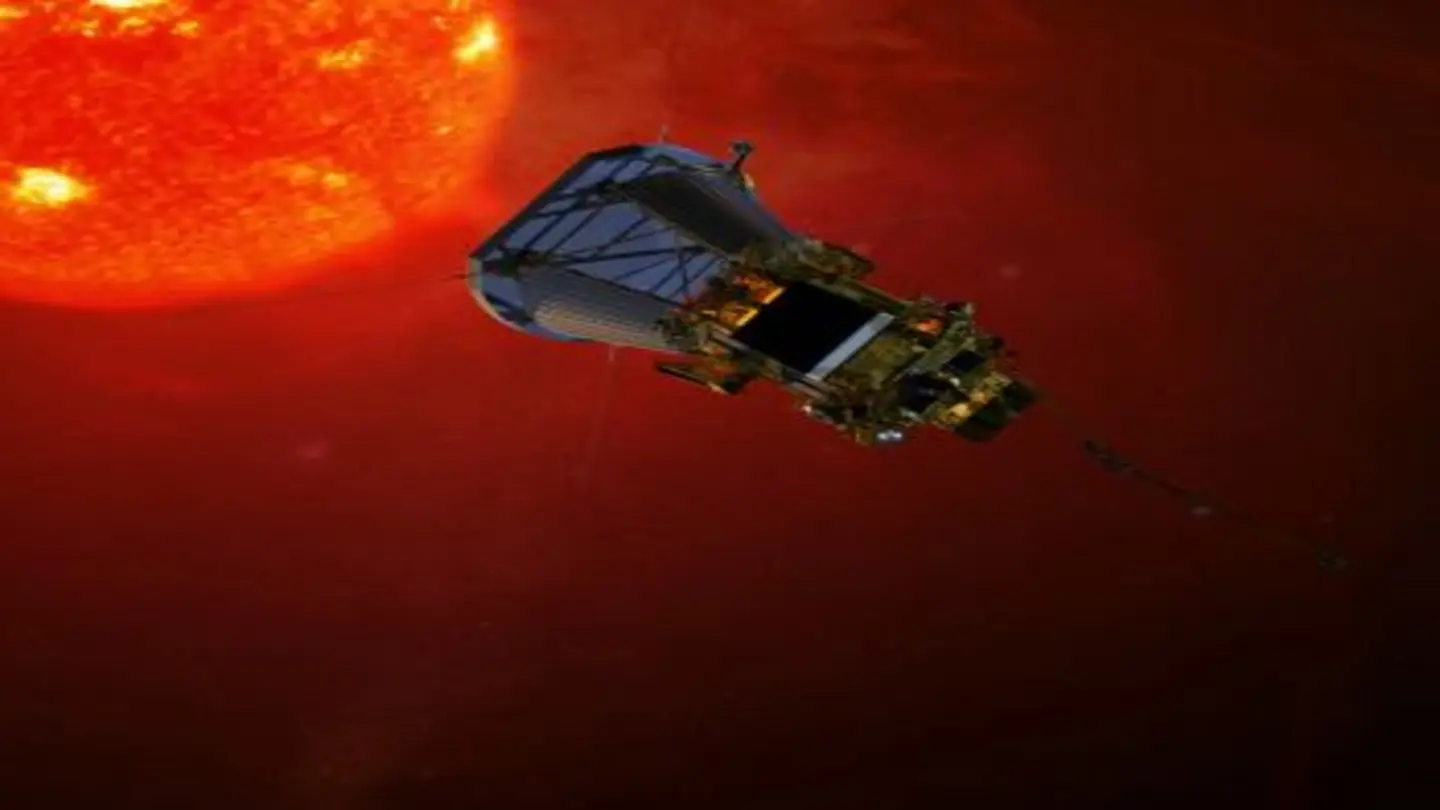
The Parker Solar Probe, a NASA mission designed to study the Sun, has achieved a new speed record during its closest approach to our star. According to India Today, the probe reached a velocity that would theoretically allow it to travel from Kashmir to Kanyakumari, the northernmost and southernmost points of India, in a mere 19 seconds. This remarkable feat underscores the probe’s advanced engineering and the extreme conditions it endures to gather data about the Sun’s corona and solar wind.
Understanding the Parker Solar Probe’s Mission
Launched in 2018, the Parker Solar Probe’s primary objective is to unravel the mysteries surrounding the Sun’s outer atmosphere, the corona. Unlike Earth’s atmosphere, the corona is significantly hotter than the Sun’s surface, a phenomenon that has puzzled scientists for decades. The probe’s mission involves repeatedly flying through the Sun’s corona, gradually decreasing its distance to the Sun over several years. These close encounters allow the probe to collect unprecedented data on the corona’s magnetic fields, plasma, and energetic particles.
To withstand the intense heat and radiation, the Parker Solar Probe is equipped with a state-of-the-art thermal protection system. This system includes a heat shield made of carbon composite material, capable of withstanding temperatures up to 1,377 degrees Celsius (2,500 degrees Fahrenheit). The probe’s instruments are carefully positioned behind the heat shield to ensure their survival during the mission’s most extreme phases.
Implications of the Speed Record
The speed record achieved by the Parker Solar Probe is a testament to the precision and sophistication of modern space exploration technology. The probe’s velocity is not just a number; it represents the culmination of years of research, development, and engineering expertise. Moreover, the data collected during these high-speed passes is invaluable for improving our understanding of the Sun’s behavior and its impact on the solar system.
The information gathered by the Parker Solar Probe has far-reaching implications for space weather forecasting. By studying the Sun’s corona and solar wind, scientists can better predict solar flares and coronal mass ejections (CMEs), which can disrupt satellite communications, power grids, and other critical infrastructure on Earth. This knowledge is essential for protecting our planet from the potentially damaging effects of solar activity.
As the Parker Solar Probe continues its mission, it is expected to break its own speed and proximity records. Each successive orbit brings the probe closer to the Sun, providing even more detailed insights into our star’s dynamics. The data collected will undoubtedly revolutionize our understanding of the Sun and its influence on the solar system, helping us to better prepare for the challenges and opportunities of space exploration.
The mission also contributes to a broader understanding of stellar physics. By studying the Sun, which is a relatively ordinary star, scientists can gain insights into the behavior of other stars throughout the universe. This knowledge is crucial for understanding the formation and evolution of galaxies, as well as the conditions that could potentially support life on other planets.
Image Source: Google | Image Credit: Respective Owner