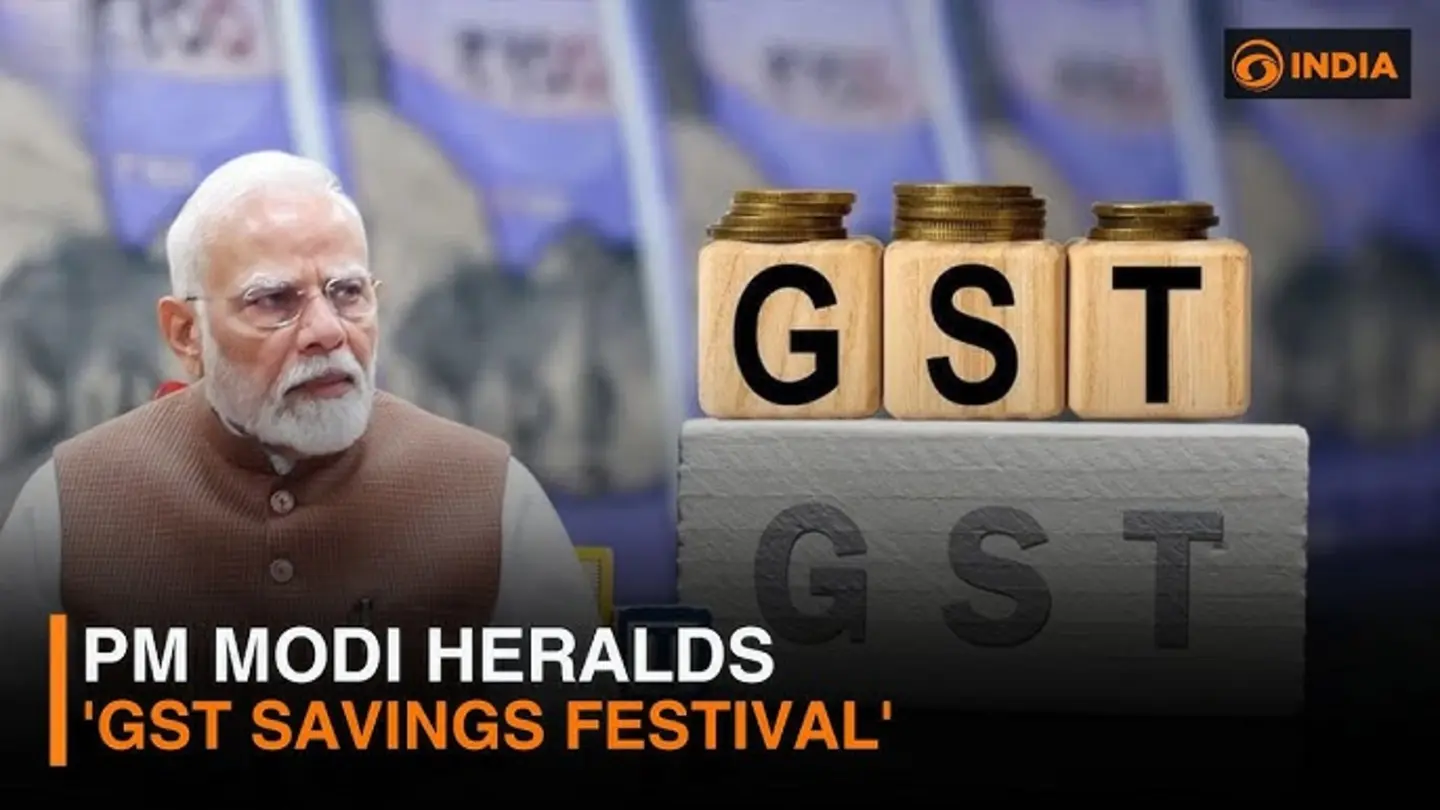
India has implemented revised Goods and Services Tax (GST) rates on various goods and services, leading to price adjustments across different sectors. Prime Minister Narendra Modi has characterized the new rates as a “savings festival” for consumers, suggesting that the changes will ultimately benefit the public through reduced tax burdens on essential items and increased affordability.
Impact on Consumers
The revised GST rates impact a wide array of goods and services, ranging from household appliances to specific food items. Some products will see a reduction in prices due to lower tax levies, while others may experience a slight increase. The government aims to streamline the tax structure, reduce complexities, and enhance compliance through these changes. The focus is on ensuring that essential goods remain affordable for the common citizen, while also encouraging the consumption of domestically produced items. This move is expected to boost the Indian economy and promote self-reliance.
The GST Council, the apex decision-making body on GST matters, has been instrumental in recommending these changes after thorough deliberations and consultations with various stakeholders. The Council comprises representatives from both the central and state governments, ensuring a consensus-based approach to taxation policies. This collaborative effort aims to balance revenue generation for the government with the need to keep prices in check for consumers.
The government’s rationale behind these revisions includes addressing anomalies in the existing tax structure, correcting inverted duty structures where the tax on inputs is higher than the tax on finished goods, and promoting local manufacturing. By aligning the tax rates with the economic realities of different sectors, the government hopes to create a more level playing field for businesses and foster a conducive environment for investment and growth.
Experts believe that these revisions will have a mixed impact on different sectors. While some industries may face short-term challenges in adapting to the new rates, the long-term benefits are expected to outweigh the initial hurdles. The simplification of the tax structure and the reduction in compliance costs are projected to boost economic activity and enhance the competitiveness of Indian businesses. The government is also committed to providing necessary support and guidance to businesses during this transition period to ensure a smooth implementation of the new rates.
Furthermore, the government is actively monitoring the impact of these changes on inflation and consumer spending. Measures are being taken to prevent any undue profiteering by businesses and to ensure that the benefits of reduced tax rates are passed on to consumers. The ultimate goal is to create a GST system that is fair, efficient, and responsive to the needs of the Indian economy and its citizens. The Prime Minister’s description of the changes as a “savings festival” underscores the government’s commitment to making taxation more consumer-friendly and growth-oriented.
Image Source: Google | Image Credit: Respective Owner