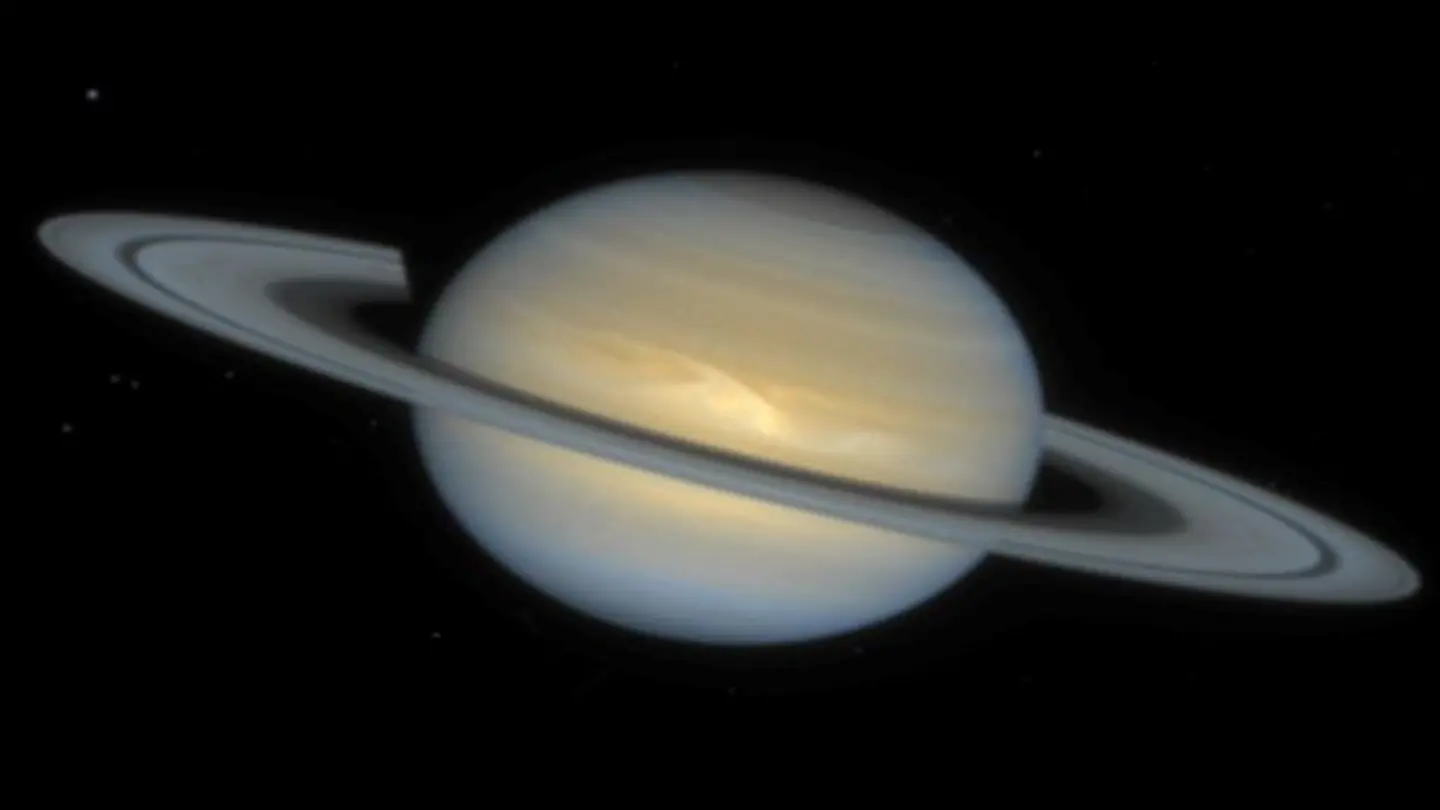
Saturn, the ringed jewel of our solar system, continues to surprise astronomers. Recent observations have revealed unique and previously unseen features within its atmosphere, prompting new research and theories about the planet’s complex dynamics. These discoveries, detailed in a new study, highlight the differences between Saturn and its gas giant sibling, Jupiter, challenging existing models of planetary atmospheres.
Unprecedented Atmospheric Observations
The new findings stem from data collected by ground-based telescopes and space-based observatories, providing a comprehensive view of Saturn’s atmospheric layers. Scientists have identified unusual temperature variations, unexpected wind patterns, and peculiar cloud formations that distinguish Saturn from other planets in our solar system. These features are not readily explained by current atmospheric models, suggesting that there are underlying processes at play that remain poorly understood.
One of the most intriguing observations is the presence of a persistent, high-altitude haze that blankets Saturn’s northern hemisphere. This haze appears to be composed of complex organic molecules, formed through photochemical reactions driven by sunlight. The composition and distribution of this haze vary with latitude and altitude, hinting at intricate interactions between the planet’s atmosphere and its magnetic field.
Furthermore, researchers have detected unusual wave patterns propagating through Saturn’s atmosphere, which are different from those observed on Jupiter. These waves may be generated by internal heat sources or by interactions with the planet’s rings, but their precise origin and role in the overall atmospheric circulation remain unclear. Understanding these wave patterns is crucial for deciphering the mechanisms that drive Saturn’s weather and climate.
Implications for Planetary Science
The discovery of these novel atmospheric features on Saturn has significant implications for our understanding of planetary atmospheres in general. It underscores the importance of studying each planet individually, as they all possess unique characteristics that cannot be easily generalized. The differences between Saturn and Jupiter, despite their similar size and composition, highlight the sensitivity of planetary atmospheres to factors such as rotation rate, magnetic field strength, and orbital parameters.
Future research will focus on developing more sophisticated atmospheric models that can account for the observed features on Saturn. This will require a combination of observational data, theoretical simulations, and laboratory experiments to unravel the complex interplay of physical and chemical processes that shape the planet’s atmosphere. Ultimately, these efforts will lead to a more complete understanding of our solar system and the diverse range of planetary environments that exist beyond Earth.
The ongoing exploration of Saturn, through both ground-based observations and future space missions, promises to yield even more surprises in the years to come. As we continue to probe the depths of Saturn’s atmosphere, we are sure to uncover new insights into the fundamental processes that govern planetary evolution.
Image Source: Google | Image Credit: Respective Owner