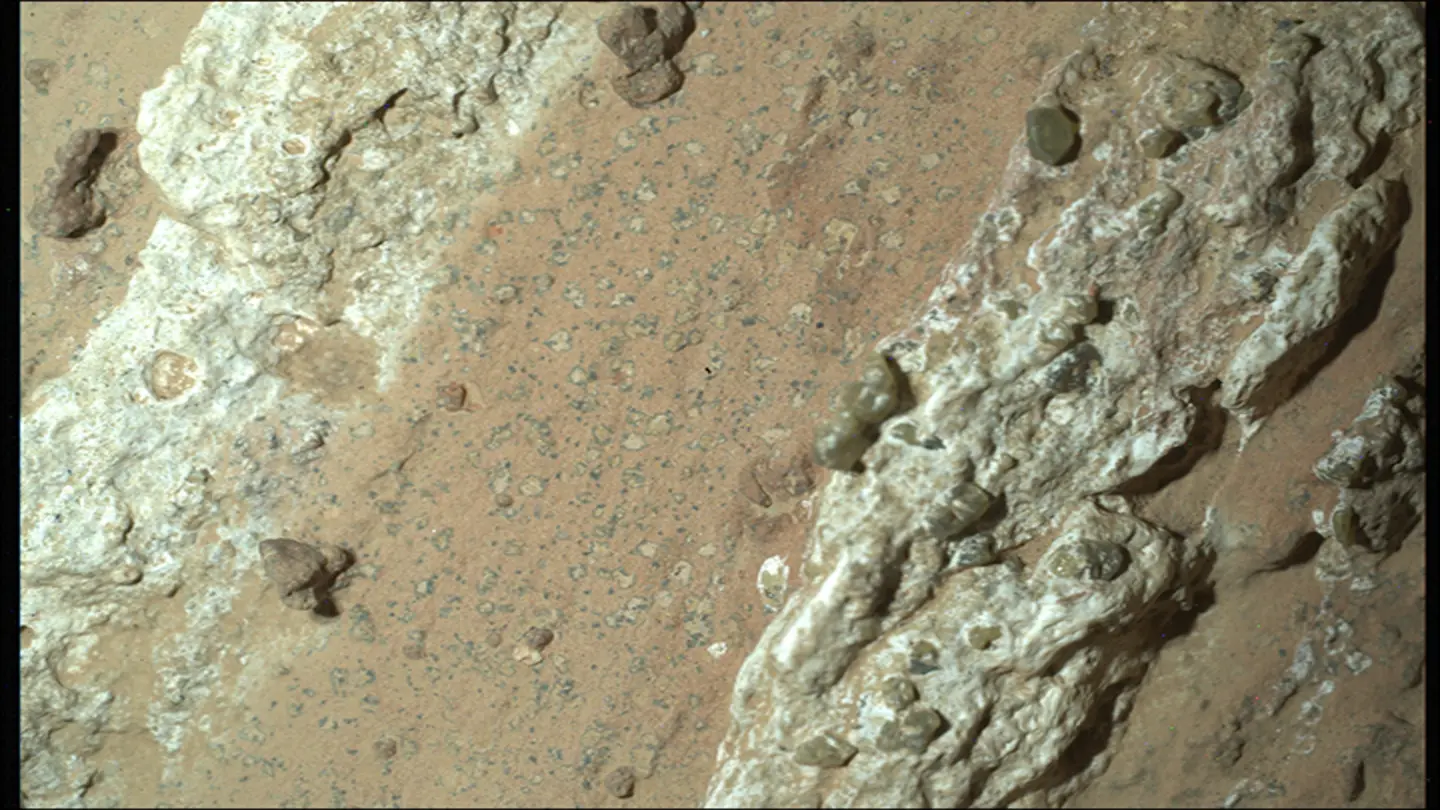
NASA’s Perseverance rover has unearthed compelling evidence suggesting that Jezero Crater on Mars, now a desolate landscape, may have once harbored life. The rover’s ongoing explorations continue to bolster the hypothesis that the crater, believed to have been a lake billions of years ago, possessed the necessary conditions to support microbial organisms.
Perseverance, since landing in February 2021, has been meticulously examining the Martian surface, collecting rock and soil samples, and transmitting invaluable data back to Earth. Scientists are particularly interested in the organic molecules discovered within the crater, which are the building blocks of life as we know it. While these molecules don’t definitively prove past life on Mars, their presence significantly increases the likelihood.
Evidence Mounts for Habitable Past
The rover’s findings reveal that Jezero Crater was not only a lake but also experienced hydrothermal activity. This means that warm, chemical-rich water circulated through the rocks, potentially providing energy sources for microbes. Hydrothermal systems are known to support life on Earth, even in extreme environments, adding weight to the possibility of similar conditions on ancient Mars.
Further analysis of the collected samples is crucial to determine if these organic molecules are indeed biosignatures, meaning evidence of past life. The samples are carefully stored within Perseverance, awaiting a future mission to retrieve them and bring them back to Earth for in-depth laboratory analysis. This sample return mission, planned for the late 2020s, represents a monumental step in the search for extraterrestrial life.
The discovery of potential biosignatures in Jezero Crater has ignited excitement within the scientific community. It underscores the importance of continued exploration of Mars and the potential for uncovering even more evidence of past or present life. Perseverance’s mission is not only about understanding Mars’ history but also about informing future missions and refining our search for life beyond Earth.
The implications of finding life on Mars would be profound, altering our understanding of the universe and our place within it. It would demonstrate that life is not unique to Earth and could potentially exist elsewhere in the cosmos. Perseverance’s findings are a testament to human ingenuity and the relentless pursuit of knowledge, pushing the boundaries of scientific exploration and inspiring future generations of scientists and explorers.
Despite the promising findings, scientists emphasize that definitive proof of past life on Mars remains elusive. The organic molecules discovered could also have formed through non-biological processes. Therefore, the analysis of the returned samples will be critical in determining their origin and whether they truly represent evidence of ancient Martian life. The world eagerly awaits the results of this groundbreaking research, which could potentially rewrite textbooks and revolutionize our understanding of life in the universe.
Image Source: Google | Image Credit: Respective Owner