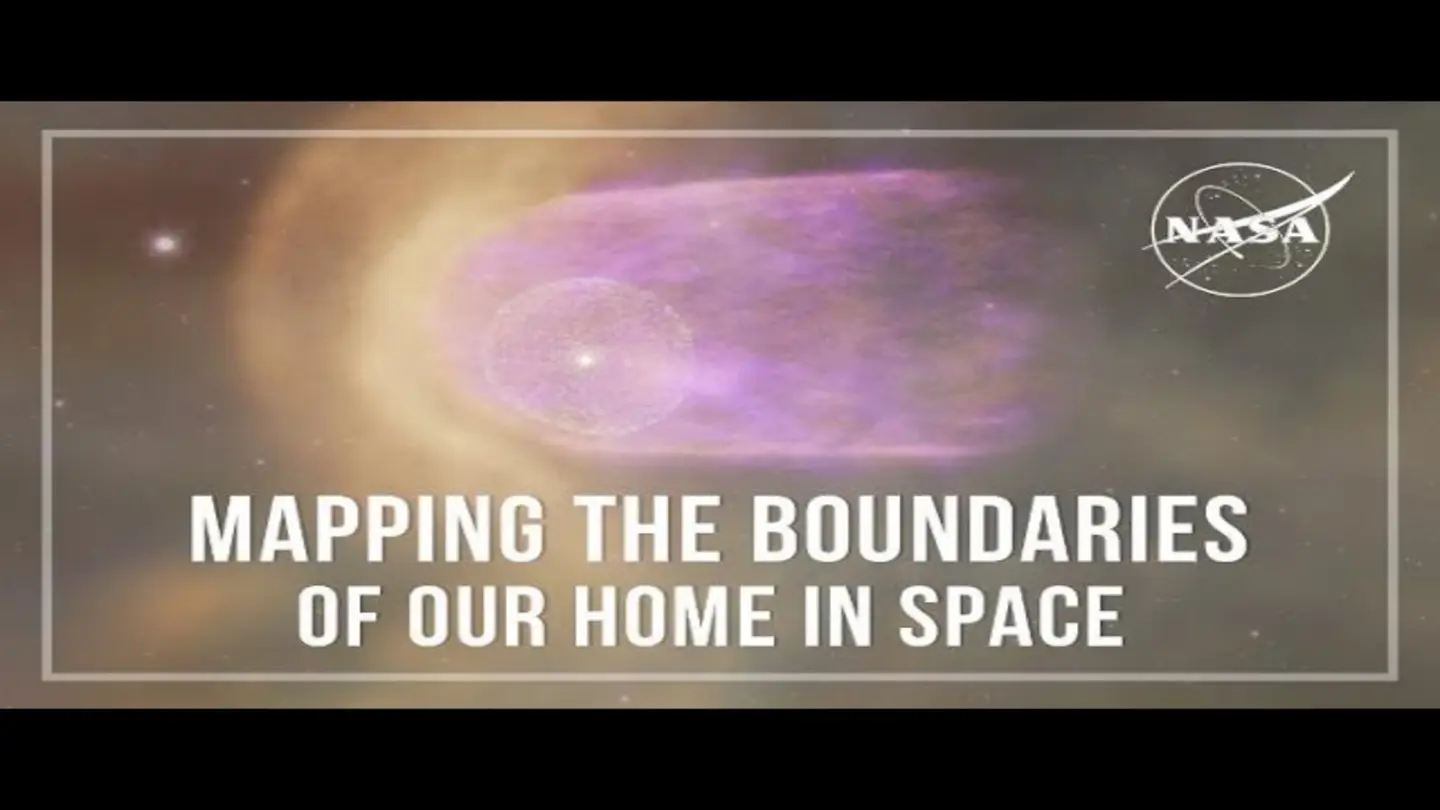
NASA’s Interstellar Mapping and Acceleration Probe (IMAP) is a mission designed to study the boundary of the heliosphere, the protective magnetic bubble surrounding our solar system. This boundary, where the solar wind meets the interstellar medium, is crucial for understanding how cosmic rays and other interstellar particles interact with and affect our solar system. IMAP aims to provide unprecedented detail about this interaction zone, helping scientists to better comprehend the fundamental processes that shape our cosmic neighborhood.
The mission’s primary objective is to map the heliosphere’s boundary and investigate the acceleration of energetic particles in this region. By studying these processes, IMAP will shed light on the origins of cosmic rays, high-energy particles that permeate the galaxy. These particles can pose a radiation hazard to spacecraft and astronauts, and understanding their sources and behavior is vital for space exploration.
IMAP’s Scientific Instruments
IMAP carries a suite of ten scientific instruments, each designed to probe different aspects of the heliosphere’s boundary. These instruments will measure the composition, energy, and direction of particles streaming from the outer reaches of the solar system. The data collected will allow scientists to create detailed maps of the heliosphere’s structure and dynamics.
Among the key instruments are the Solar Wind Electron, Proton, and Alpha Monitor (SWEAP), which will measure the properties of the solar wind as it approaches the heliosphere’s boundary, and the Interstellar Boundary Explorer (IBEX)-Hi and IBEX-Lo instruments, which will detect energetic neutral atoms (ENAs) that are produced in the interaction region. These ENAs provide valuable information about the conditions and processes occurring at the heliosphere’s edge.
The Significance of IMAP’s Research
The findings from IMAP will have far-reaching implications for our understanding of the solar system and the galaxy. By mapping the heliosphere’s boundary, IMAP will help us to visualize the complex interplay between the solar wind and the interstellar medium. This knowledge is essential for predicting how the heliosphere responds to changes in solar activity and the interstellar environment.
Furthermore, IMAP’s research on energetic particles will contribute to our understanding of cosmic ray acceleration and propagation. Cosmic rays are believed to be accelerated by shocks in astrophysical plasmas, such as those found at the heliosphere’s boundary. IMAP’s measurements will provide valuable insights into the mechanisms that accelerate these particles to such high energies.
IMAP is scheduled to launch in early 2025. The mission represents a significant investment in space science and is expected to revolutionize our understanding of the heliosphere and its role in shaping our solar system’s environment. The data collected by IMAP will be invaluable for years to come, paving the way for future missions to explore the outer reaches of our solar system and beyond.
The mission also supports NASA’s broader goals of protecting astronauts and spacecraft from the harmful effects of space radiation. By better understanding the sources and behavior of cosmic rays, IMAP will help to mitigate the risks associated with long-duration space missions. The knowledge gained will be crucial as humanity ventures further into the solar system and begins to explore the possibilities of interstellar travel.
Image Source: Google | Image Credit: Respective Owner