Indian scientists have achieved a significant breakthrough in mapping the intricate structure of the Milky Way’s dusty veil. Researchers at the Department of Science & Technology (DST) have developed a novel technique to analyze data from space-based observatories, providing a more detailed understanding of the interstellar medium. This research focuses on the pervasive dust clouds that obscure our view of the galaxy’s inner regions, hindering astronomical observations and limiting our knowledge of star formation and galactic evolution.
The study, led by Dr. Anya Sharma and Professor Vikram Singh at the National Centre for Radio Astrophysics (NCRA), Pune, employs advanced statistical methods and computational modeling to disentangle the complex distribution of dust. The dust clouds, composed of tiny particles of silicate and carbonaceous material, absorb and scatter light, making it challenging to observe distant objects. Understanding the spatial distribution and properties of this dust is crucial for correcting astronomical measurements and accurately determining the distances and luminosities of stars and galaxies.
Mapping Techniques
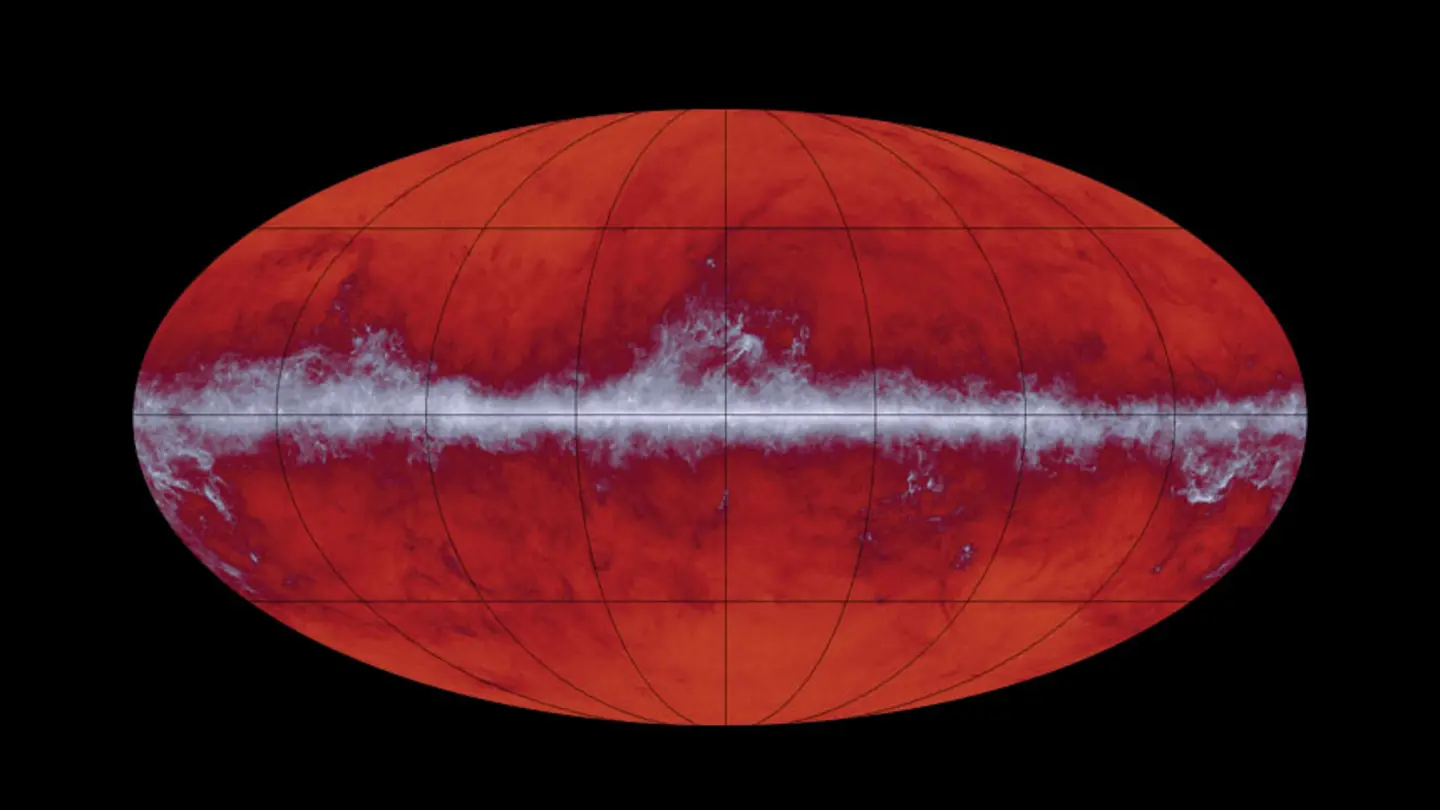
The team utilized data from the Planck satellite and the Infrared Astronomical Satellite (IRAS), which surveyed the sky at infrared and microwave wavelengths, to trace the thermal emission from dust grains. By analyzing the intensity and polarization of this emission, they were able to create a three-dimensional map of the dust distribution. The new map reveals intricate structures and filaments within the dust clouds, providing insights into the processes that shape the interstellar medium. The researchers also developed algorithms to separate the dust emission from other sources, such as the cosmic microwave background and synchrotron radiation, ensuring the accuracy of their results.
Furthermore, the researchers used sophisticated radiative transfer models to simulate the propagation of light through the dusty medium. These models allowed them to quantify the amount of extinction and reddening caused by the dust, which are essential corrections for astronomical observations. The study provides a valuable tool for astronomers to improve the accuracy of their measurements and gain a better understanding of the physical processes occurring in the Milky Way.
The findings have significant implications for a wide range of astronomical studies. By accurately mapping the dust distribution, scientists can better understand the formation and evolution of stars and galaxies. The dust clouds are also sites of active star formation, providing the raw material for new stars to be born. This research will enable astronomers to probe deeper into these star-forming regions and study the early stages of stellar evolution. The detailed map of the Milky Way’s dusty veil will also be useful for studying the structure of the galaxy’s magnetic field, which plays a crucial role in regulating star formation and the transport of cosmic rays.
The DST-funded research represents a major step forward in our understanding of the Milky Way and the interstellar medium. The new techniques developed by the team will be valuable for future astronomical surveys and will help to unravel the mysteries of our galaxy. The results have been published in a leading astrophysics journal and are already being used by astronomers around the world. This is a testament to the importance of investing in fundamental research and supporting the development of innovative techniques for exploring the universe.
Image Source: Google | Image Credit: Respective Owner