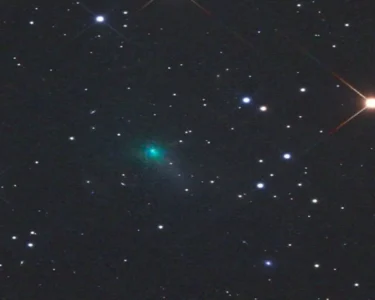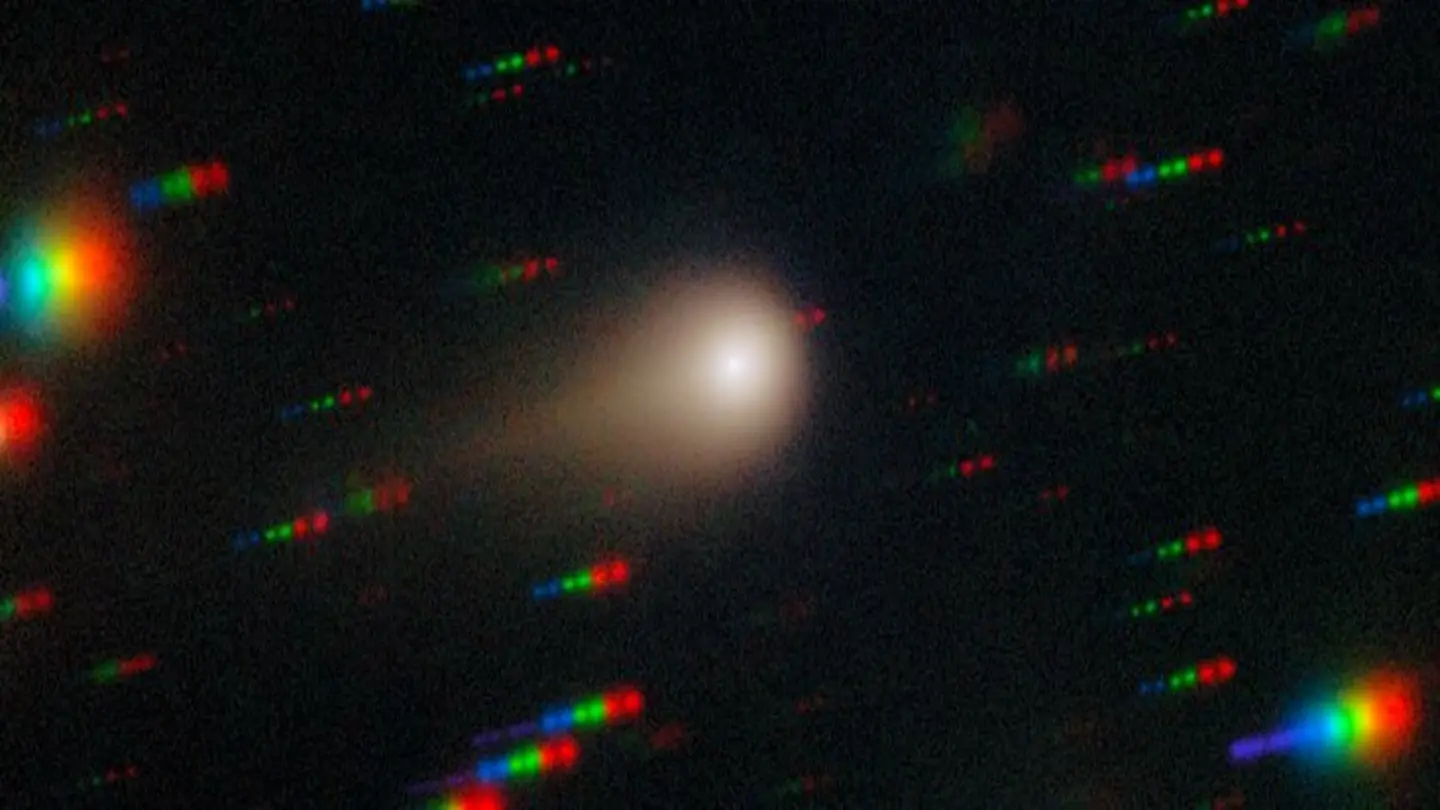
Scientists have gleaned new insights into the composition of the interstellar comet 3I/ATLAS, revealing unique chemical signatures that differentiate it from comets originating within our solar system. The research, published in a recent issue of a leading astronomical journal, sheds light on the building blocks of planetary systems beyond our own and provides valuable clues about the comet’s origin.
The study focused on analyzing the spectral characteristics of 3I/ATLAS as it traversed the inner solar system. Researchers used powerful telescopes equipped with sophisticated spectrographs to dissect the comet’s light, identifying the presence and abundance of various elements and molecules within its coma – the cloud of gas and dust surrounding the comet’s nucleus. The analysis revealed several surprising findings.
Detection of Nickel
One of the most significant discoveries was the detection of nickel in the comet’s coma. While nickel has been observed in other comets, its abundance in 3I/ATLAS appears to be significantly higher, suggesting that the comet formed in an environment rich in this element. This finding has implications for understanding the conditions under which the comet’s parent star system formed.
Cyanide Abundance
The research team also noted a relatively high abundance of cyanide (CN) in 3I/ATLAS compared to typical solar system comets. Cyanide is a molecule commonly found in cometary atmospheres, but its elevated levels in this interstellar visitor point to differences in the chemical processes that shaped its composition. The higher cyanide levels could potentially arise from the parent star system’s unique chemical makeup or differing radiation environments.
Carbon-Chain Depletion
In contrast to the elevated levels of nickel and cyanide, the study also found a notable depletion of carbon-chain molecules in 3I/ATLAS. These molecules, which consist of chains of carbon atoms linked together, are commonly found in comets and are considered important building blocks for more complex organic molecules. The depletion of carbon-chain molecules suggests that 3I/ATLAS may have formed in a region where these molecules were either less abundant or were destroyed by some physical process.
These compositional peculiarities of 3I/ATLAS offer invaluable insights into the diversity of planetary systems. They also underscore the importance of studying interstellar objects to understand the full range of conditions under which comets and planets can form. Further research on interstellar comets, as more are discovered, promises to further refine our understanding of the cosmos and our place within it. The researchers hope that future observations with even more powerful telescopes will reveal even more details about the composition of 3I/ATLAS and other interstellar objects.
This research highlights the ongoing quest to understand the origins of our solar system and the potential for life beyond Earth. By studying these interstellar travelers, we gain a better understanding of the building blocks of planets and the conditions that are necessary for life to arise. This is a fascinating area of research with many exciting discoveries on the horizon.
Image Source: Google | Image Credit: Respective Owner